
Summer is in full swing, and many children across the country are enjoying time off from school. While families across the income spectrum benefit from opportunities for play and relaxation, low-income families often face greater challenges accessing the same summer experiences. Research shows that students can lose math and reading knowledge over the summer without access to developmental enrichment, an effect that disproportionately affects children from low-income households.
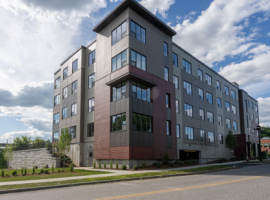
Fortunately, many owner-operators of Housing Credit homes understand these challenges and are stepping up. In addition to providing safe, affordable rental homes, Housing Credit properties offer supportive youth services and programming that prioritizes both academic success and social-emotional development—and most importantly—leaves plenty of space and time for fun.
Benefits and amenities that help uplift residents are crucial to the Housing Credit implementation process—most commonly we think of access to job training, healthcare, childcare, or even food pantries. Along with those critical services, some states award bonus points for youth services programs in their qualified allocation plans (QAPs), which govern how Housing Credits are awarded at the state level. For example, Nebraska’s QAP awards points for “weekly tutoring services for students,” “weekly after-school enrichment program,” “quarterly parenting classes,” and “quarterly financial literacy classes for youth,” among others. DC’s QAP is less specific, awarding points for “tutoring/educational assistance for youth or adults.” Developers have lots of flexibility to propose unique projects that provide comprehensive, well-rounded services for families and children, and this flexibility helps them create opportunities to make Housing Credit properties more than just a home.
Many affordable housing youth services programs exist during the year as academic-based programming and shifts towards field trips and community activities in the summer. Enterprise Community Partners, where I’m an intern, is a major owner-operator of Housing Credit properties and co-chair of the ACTION Campaign and has several thousand kids in properties financed by the Housing Credit throughout the Mid-Atlantic. Seven Enterprise properties feature specific youth supportive services: three in Maryland, two in DC, and two in Virginia. For example, at the Forest Ridge apartment community in Columbia, MD, Enterprise partners with Howard County Public Schools’ Black Student Achievement Program to provide students with specialized instruction and monitor their academic achievement and growth. After-school academic enrichment such as this typically consists of academic programming and includes assessments and report cards to set baselines for success.
Other out-of-school programs encourage kids and families to participate in “social-emotional learning,” enriching their social skill development and connectedness; classes are structured around subjects such as self-esteem, recognizing emotions, and dealing with anger. Both social-emotional learning programs and academic programs contain plenty of time for fun, especially in the summer, where academic programs do not test. Students go on college tours, trips to museums and water parks, and more fun activities. Parents are encouraged to participate in program orientations and help their kids assess benchmarks, and Enterprise hosts workshops for family connectedness and education programs to improve families’ digital literacy. Essex House, an Enterprise property in Takoma Park, MD, partners with So What Else, Inc., a resource center that develops after-school programming for at-risk youth in over 20 communities. Their programming prioritizes ideals like youth empowerment, compassion, creativity, and fulfilling one’s civic duty. By partnering with nonprofit organizations that develop and implement learning curricula, Enterprise was able to successfully achieve Housing Credit funding and provide benefits for families at the same time.
Other Housing Credit property operators partner with program delivery groups like Operation Pathways, Advantage Services, and Connected Communities to provide creative and engaging summer programs. Connected Communities designs housing-based supportive services in 17 states and DC, with summer camp programming for more than 15,000 students. Operation Pathways uses a project-based “Virtual Vacation” curriculum to combine academic and creative education during the summer. Advantage Services’ Study Buddies and Homework Center programs, as well as field trips, served 421 students in 2022; 93% of students improved their reading level. All of these programs work for teens as well, not just young children, offering leadership development classes and assisting with college applications and financial aid.
The Housing Credit is the nation’s most effective tool for creating and preserving affordable housing, but its impact goes far beyond bricks and mortar. Youth services also support parents, giving them peace of mind and space to focus on work and family responsibilities. When parents are busy working to support their children, these programs give students a safe place to establish community ties, have fun with new friends, and invest in themselves — not just in the summer, but throughout the whole year.