Housing Credit Turns 40!
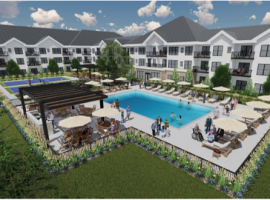
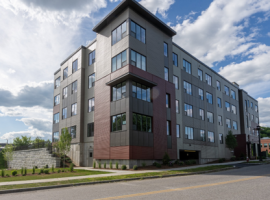
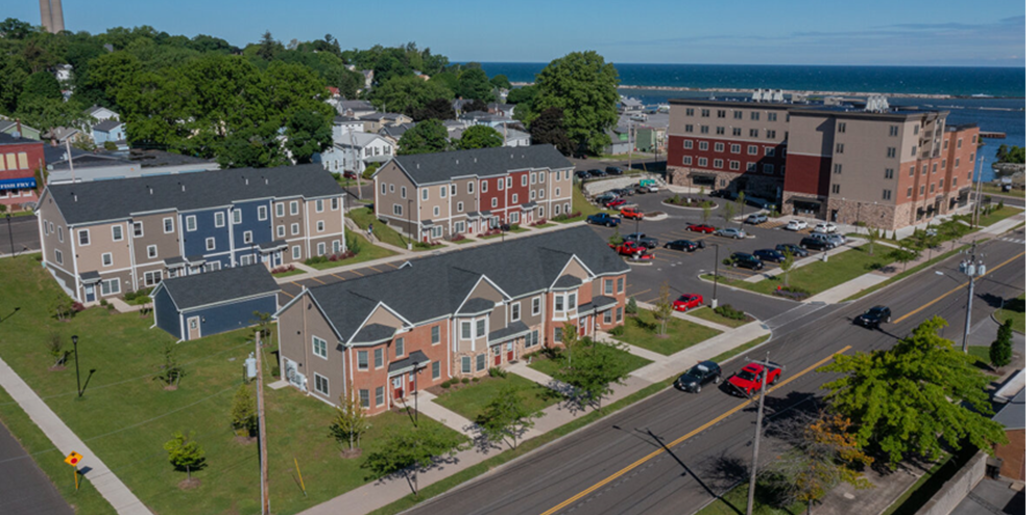
The Housing Credit turns 40 in October! The Housing Credit was signed into law by President Ronald Reagan on October 22, 1986, as part of the Tax Reform Act of 1986. Since then, the Housing Credit has become the number one tool for financing the construction and preservation of affordable rental housing. It has financed over four million units, serving more than nine million households across the country. Stay tuned for a blog post coming soon with more information about the program’s accomplishments over these four decades!
CRA Update
CRA Comments Due October 13
As covered in last month’s ACTION newsletter, the Office of the Comptroller of the Currency (OCC) and the Federal Deposit Insurance Corporation (FDIC), two of the three federal banking regulators, formally published in the Federal Register the Notice of Proposed Rulemaking (NPR) that would change their current rules that implement the Community Reinvestment Act (CRA). As explained in ACTION’s newsletters last month and in August, the proposed CRA rule would revise the asset thresholds that determine how CRA is applied to different banks based on the amount of their assets, cap the amount of grant money going to overhead that banks give to local nonprofits at 15 percent, and would make other changes. CRA drives the vast majority – around 80 percent yearly as of 2024 – of Housing Credit investments. The OCC and FDIC are requesting comments by Tuesday, October 13.
To help ACTION’s members with their comments, ACTION has created these talking points and this template letter that your organization can use as a basis to draft your own comment letters. ACTION’s Steering Committee will also submit its own letter.
In addition to sending your own individual letter, ACTION members are invited to sign onto this national comment letter being organized by the National Association of Affordable Housing Lenders, an ACTION Steering Committee member. The deadline to sign onto this letter is Tuesday, October 6, by the end of the day.
Legislative State-of-Play
Congress Wraps Up Pre-Election Work; Sprint to the Midterms
Congress returned briefly in September for its final pre-election work; the House departed again in mid-September, while the Senate is wrapping its work up this week, before heading home for the rest of October through the election in November.
Congress passed, and President Trump signed, a stopgap spending deal, known as a continuing resolution or CR, funding the government at last fiscal year’s levels through December 11, instead of achieving a full-year spending deal for Fiscal Year 2027 (FY27), which starts on October 1. Either way, Congress has averted a government shutdown during the final weeks of the campaign season.
At this point, there is no clear path for advancing tax legislation, including the Affordable Housing Credit Improvement Act (AHCIA), this year. While a “lame duck” bipartisan tax deal is still technically possible, such a plan is yet to coalesce, particularly as Congress will need to focus on issues like finalizing appropriations bills in the lame duck session after the election. There are other tax proposals that could serve as a vehicle for a tax package, such as a film tax credit for TVs and movies, a cryptocurrency tax framework, and a slate of tax administration reforms, but it is not clear if there is enough support to further advance any of these before year’s end. Of course, tax changes have hitched a ride on appropriations bills in the past, but such an outcome is not common, and odds are long for other vehicles that could carry tax legislation, including a reconciliation bill.
ACTION encourages advocates to use this time while Congress is home campaigning to reach out to Members and ask that they cosponsor the AHCIA. ACTION recently updated its In-District Advocacy Guide to help affordable housing advocates secure support for the Housing Credit and the AHCIA. It details steps advocates can take to build support for the Housing Credit during the recess — everything from a quick post on social media if you have only a few minutes to an op-ed if you have an hour or two. If you have even more time, we especially encourage ACTION members to contact your Members of Congress’ offices to invite them to view the Housing Credit in action in their communities, including groundbreakings, ribbon cuttings, or site visits. The ACTION Campaign has a number of advocacy materials to help support your outreach, including National, State, and Congressional District Fact Sheets, updated statewide ACTION Campaign member lists, sample emails for outreach, as well as detailed information about the legislation in our Advocacy Toolkit.
Another way advocates can raise the profile of the Housing Credit is by creating video testimonials featuring residents who live in Housing Credit properties. We are asking ACTION members to help capture these testimonials and share the local, people-centered impact these federal policies have in communities.
- Create a short video (up to two minutes long) telling Congress why the Low-Income Housing Tax Credit is so important for your community, business, or family.
- Whether you use your cellphone or a professional camera — it’s all about the story and message. (Videos shot on phones are often better, because they are more authentic, but be sure to shoot the videos in areas without too much background noise.)
- Who is the best speaker to connect with your Senators or Representative? It is ideal to hear from residents, but it could also be a community leader, a business owner, or a property owner.
- Be creative! Submit videos to housingactioncampaign@gmail.com.
Other Housing Credit Legislation Introduced in Congress
Recently, Reps. Dan Goldman (D-NY-10) and Nicole Malliotakis (R-NY-11) introduced the Federal Investment Exception for Essential Rehabilitation (FIXER) Act (H.R. 9906). This bill would allow state agencies that issue private activity bonds (PABs) the option to exclude tax-exempt PABs from the annual state volume cap if those bonds are used for preserving, improving, or replacing affordable housing, including affordable housing financed by the Housing Credit. ACTION has no position on this legislation.
On September 23, Sen. Peter Welch (D-VT) introduced the Supporting Small Affordable Housing Developers Act (S. 5472). This bill would allow grants made to small developers of affordable housing to be exempt from taxation, and would also make the income from the sale of transferable state tax credits, including state Housing Credits, from federal taxation. Together, these provisions aim to allow small affordable housing developers to devote that money saved to the construction and preservation of affordable housing. ACTION has no position on this bill.
On September 24, Sen. Cory Booker (D-NJ) introduced the Transit-Oriented Housing Development Act (S. 5553). The bill would increase each state’s private activity bond (PAB) cap by 30 percent, potentially unlocking significantly more 4 Percent Housing Credits; provide a basis boost of up to 50 percent for Housing Credit properties near transit hubs – or up to 100 percent if they also use prevailing wage standards; and appropriate $300 billion over 10 years to the National Housing Trust Fund, paired with a requirement to prioritize this additional HTF funding to properties located near a transit hub. For Housing Credit properties financed by the increase in PABs, the bill would increase the income limits to 120 percent of the Area Median Income (AMI), as long as at least 20 percent of the units are occupied by residents earning up to 50 percent of AMI and at least 10 percent of the units are occupied by residents earning up to 30 percent of AMI. ACTION has no position on this bill.
AHCIA Cosponsorship
The push to build cosponsorship of the AHCIA continues, and we need your help to leverage the momentum from the One Big Beautiful Bill Act to add more Members of Congress to the bill. In particular, ACTION is targeting Republicans, as both the House and Senate versions of AHCIA have Democrats waiting to be added, as we seek to maintain party parity. Strong cosponsorship is important should there be additional opportunities to advance a tax package in the remainder of this Congress and to ensure a strong foundation of support for the next Congress.
The AHCIA currently has 39 percent of Congress (across both the House and Senate) cosponsoring, with support evenly divided by Republicans and Democrats. Last Congress, we had nearly 60 percent of Congress signing on as cosponsors.
Administration Updates
HUD Publishes 2027 Fair Market Rents
On September 1, HUD published the 2027 Fair Market Rents (FMR), which, among other things, factor into the calculation for Housing Credit program income limits in areas that have a high housing-cost adjustment. The FMRs will become effective October 1. An analysis by ACTION member Novogradac & Co. reveals that, on a population-weighted basis, FMRs rose approximately two percent over last year; almost 20 percent of FMR areas experienced a decline; and non-metro and rural areas experienced FMR growth greater than the metro area average.
ACTION Membership
In September, the ACTION Campaign welcomed one new member to the coalition!
Please join us in welcoming the following new member:
- Verde Valley Community Development Organization, Arizona
Help ACTION continue to grow our membership and advocacy strength by encouraging your networks to support affordable housing and the Housing Credit by joining the coalition. Membership is free.
Housing Credit Research
- A September 1 article in the Novogradac Journal of Tax Credits covers over a half-dozen provisions in the 21st Century ROAD to Housing Act that will be beneficial for the Housing Credit.
- A September 2 blog post by ACTION member Novogradac & Co. analyzes the recently published allocation amounts for the Housing Trust Fund and other programs that are sometimes used as critical gap financing for Housing Credit properties.
- A September 22 blog post by Novogradac analyzes updated Housing Credit activities through 2024 and highlights Novogradac’s updated Housing Credit mapping tool. Their analysis finds that New York’s 13th Congressional District has the most Housing Credit properties of any House district, while the neighboring 15th District has the most Housing Credit units of any House district. The analysis also reveals that NY-15 has the greatest cumulative allocation amount of Housing Credits.
Housing Credit in the News
- A September 3 article in Affordable Housing Finance covers the growing trend of increases in new Housing Credit activity, primarily because of the historic expansion of Housing Credit resources achieved last year. The article also predicts that the increased PWI cap achieved in the 21st Century ROAD to Housing Act will further increase this trend, but cautions that the new CRA proposed rule could have a dampening effect if enacted as-is. The article contains interviews from several ACTION members.
- On September 10, longtime AHCIA cosponsor Rep. Ritchie Torres (D-NY-15) sent a letter to the Federal Reserve, the OCC, and the FDIC requesting that the three federal banking regulators lower the risk weighting for Housing Credit equity investments and associated loans from 100 percent down to 20 percent. In June, around two-dozen ACTION members sent similar letters to the banking regulators with the same request.
- A September 23 article in American Banker summarizes a recent speech by Federal Reserve Gov. Michael Barr, in which Barr highlighted the important role of CRA for the Housing Credit. He said that much of the $430 billion in CRA-motivated activity in 2024 went towards housing development utilizing the Housing Credit, and noted that the Housing Credit is a proven tool for financing “safe, stable, and affordable apartments that strengthen families and communities.”